


The excellence in preclinical research on stroke
Contact an expert
STROK@LLIANCE is a brand created in 2017 by ETAP-LAB to identify its neurovascular services, offered as part of a strategic partnership with the ESR3P (Experimental Stroke Research Platform) at the University of Caen (UniCaen).
This alliance, based on an innovative public–private collaboration model, combines the scientific excellence of the PhIND research laboratory (UMR-S 1237 INSERM UniCaen) led by Prof. Denis VIVIEN, with ETAP-LAB’s recognized expertise in conducting preclinical studies to industrial standards, providing you with the best of academic and private research within a single service.
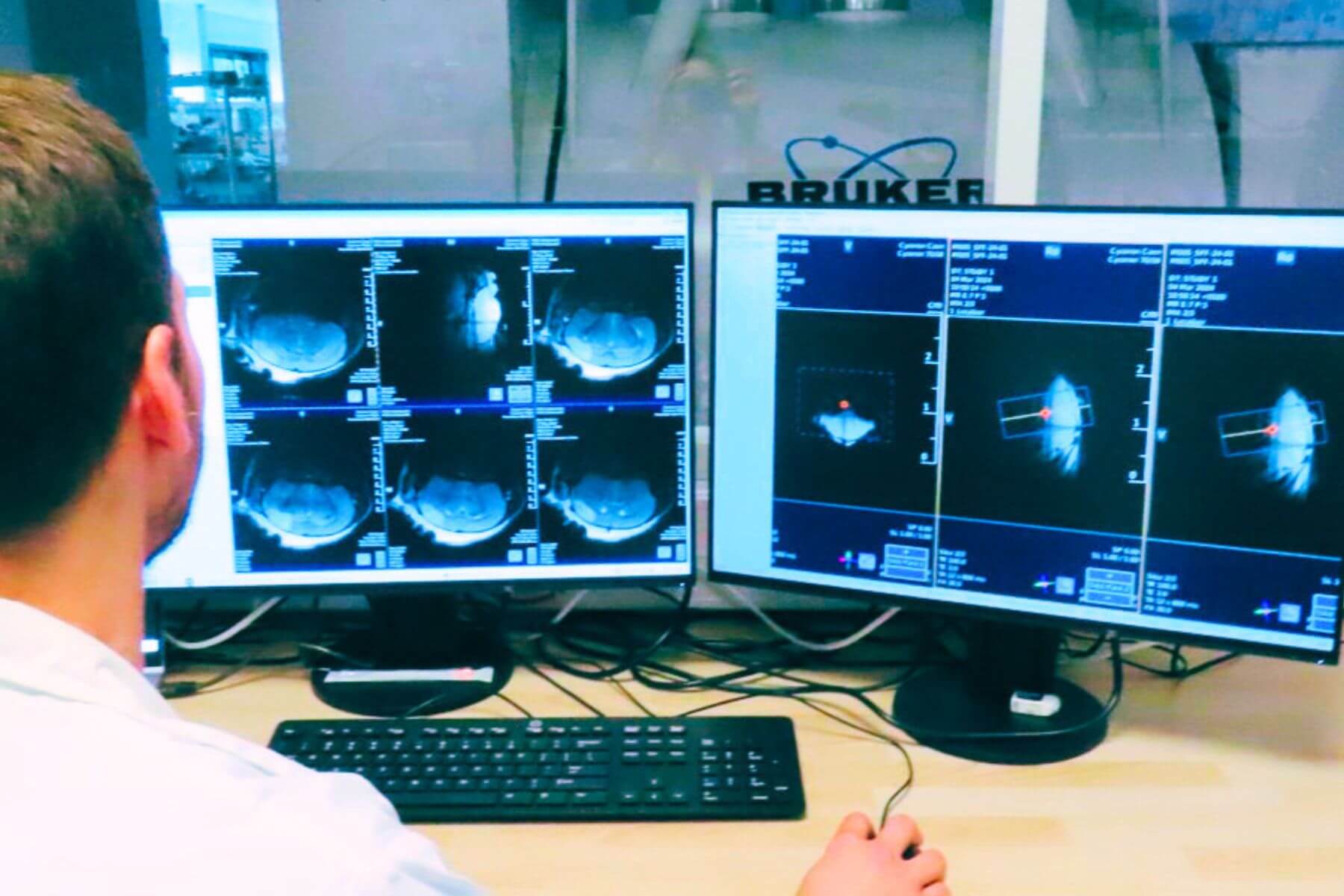
With private facilities located at the heart of the Jules Horowitz campus in Caen, STROK@LLIANCE benefits from privileged access to the CYCERON biomedical imaging platform, which provides state-of-the-art technical equipment and high-level support.
The only CRO service 100% dedicated to preclinical stroke research
The STROK@LLIANCE team consists of ETAP-LAB employees—PhD biologists and laboratory technicians—all stroke experts. They manage and implement a range of innovative and translational stroke models developed through PhIND’s research.
Academic–industrial synergy to deliver high value-added services

The development of innovative drugs and therapies for stroke treatment is one of the greatest challenges in current medical research, with a clinical translation failure rate close to 100%.
For more than 20 years, the PhIND unit has developed innovative and translational stroke models to support its research on the role of tissue plasminogen activator (tPA) in the pathophysiology of neurovascular diseases. With the scientific and technical support of Prof. Denis Vivien, STROK@LLIANCE ensures the industrialization of the stroke models developed by the PhIND unit to make them routinely accessible to pharmaceutical and biotech companies.
Each protocol is discussed according to your therapeutic innovation; we advise you on the best strategy, from POC to non-GLP pre-IND safety study. Thanks to our expertise and experience, we work with you at every step to define the best models and experimental designs, which we implement within our rigorous quality system.
Still have questions? Upon request, benefit from the advice of an internationally renowned KOL to refine your strategy, define the study protocol, and interpret your data.
Denis Vivien is a Professor of Cell Biology, a Hospital Practitioner (Caen-Normandy University Hospital – Department of Clinical Research), and a Senior Professor at the Institut Universitaire de France. He heads the laboratory of Pathophysiology and Imaging of Neurological Disorders (PhIND, UMR-S U1237, INSERM/EFS/Univ. Caen-Normandie). He has played a key role in understanding the function of serine proteases in regulating the molecular and cellular events that occur during ischemic stroke.
In 2005, he discovered the influence of serine proteases on NMDA glutamatergic signaling and neurotoxicity. His research projects now focus on the role of serine proteases in maintaining neurovascular unit homeostasis. With the aim of getting ever closer to human pathology, he is committed to developing preclinical translational models as well as innovative tools for diagnostic and therapeutic applications. Denis Vivien is the 2023 recipient of the Danièle Hermann Prize, awarded unanimously by the jury of the Fondation Recherche Cardio-Vasculaire – Institut de France. He is co-author of over 150 scientific publications and several patents in this field.
