• CRO Services
  • Working with us
  • Company
  • Ressources
  • News
  • Career
  • Fr / En
  • Contact us →
  • Home
  • Working with us
  • Ressources
  • Company
  • News
  • Career
  • Contact
Fr / En
By Service
  • Dermatology – picto dermatologie Dermatology →
  • Neurology & CNS – picto neurologie Neurology & CNS →
  • Cardiovascular – picto cardiovasculaire Cardiovascular →
  • Neurovascular & Stroke – picto neurovasculaire Neurovascular & Stroke →
By service
  • In Vitro Efficacy Study
  • In Vivo Efficacy Study
  • Analytical services
  • Non-Regulatory Safety
  • PK/PD
  • Scientific consulting
By technology
  • High Content Imaging
  • Brain-on-Chip
  • Small & Large Animals
  • In Vivo Imaging
  • Biological Assays
  • Immunohistochemistry & Histology
  • Dermatology – picto dermatologie Dermatology →
  • Neurology & CNS – picto neurologie Neurology & CNS →
  • Cardiovascular – picto cardiovasculaire Cardiovascular →
  • Neurovascular & Stroke – picto neurovasculaire Neurovascular & Stroke →
By service
  • In Vitro Efficacy Study
  • In Vivo Efficacy Study
  • Analytical services
  • Non-Regulatory Safety
  • PK/PD
  • Scientific consulting
By technology
  • High Content Imaging
  • Brain-on-Chip
  • Small & Large Animals
  • In Vivo Imaging
  • Biological Assays
  • Immunohistochemistry & Histology
  • Pulmonary embolism model induced by injection of autologous clots

    The pulmonary embolism model induced by injection of autologous clots relies on preparing and injecting pre‑formed calibrated clots into the jugular vein to selectively obstruct the pulmonary arteries. This model reproduces the acute increase in pulmonary pressure observed in human clinical settings, along with significant stress on the right ventricle and secondary vascular remodeling. The severity of the condition can be adjusted based on the amount of thrombotic material used. Its strong reproducibility and rapid implementation make it suitable for quickly evaluating the efficacy of thrombolytic, vasodilatory, or cardioprotective treatments.

    Rat model.
  • PK model

    We offer studies tailored to your PK and Neuro-PK needs, covering various administration routes (subcutaneous, intraperitoneal, intravenous, oral, intranasal, etc.) in both acute and chronic treatment paradigms. The bioavailability of your molecules is quantified across different compartments—including blood, brain, cerebrospinal fluid, or any other tissue of interest. This approach provides reliable data to support decision-making and accelerate the development of your therapeutic candidates.

    Available in mice, rats, and pigs.

  • Clot lysis assay

    Clot lysis assay

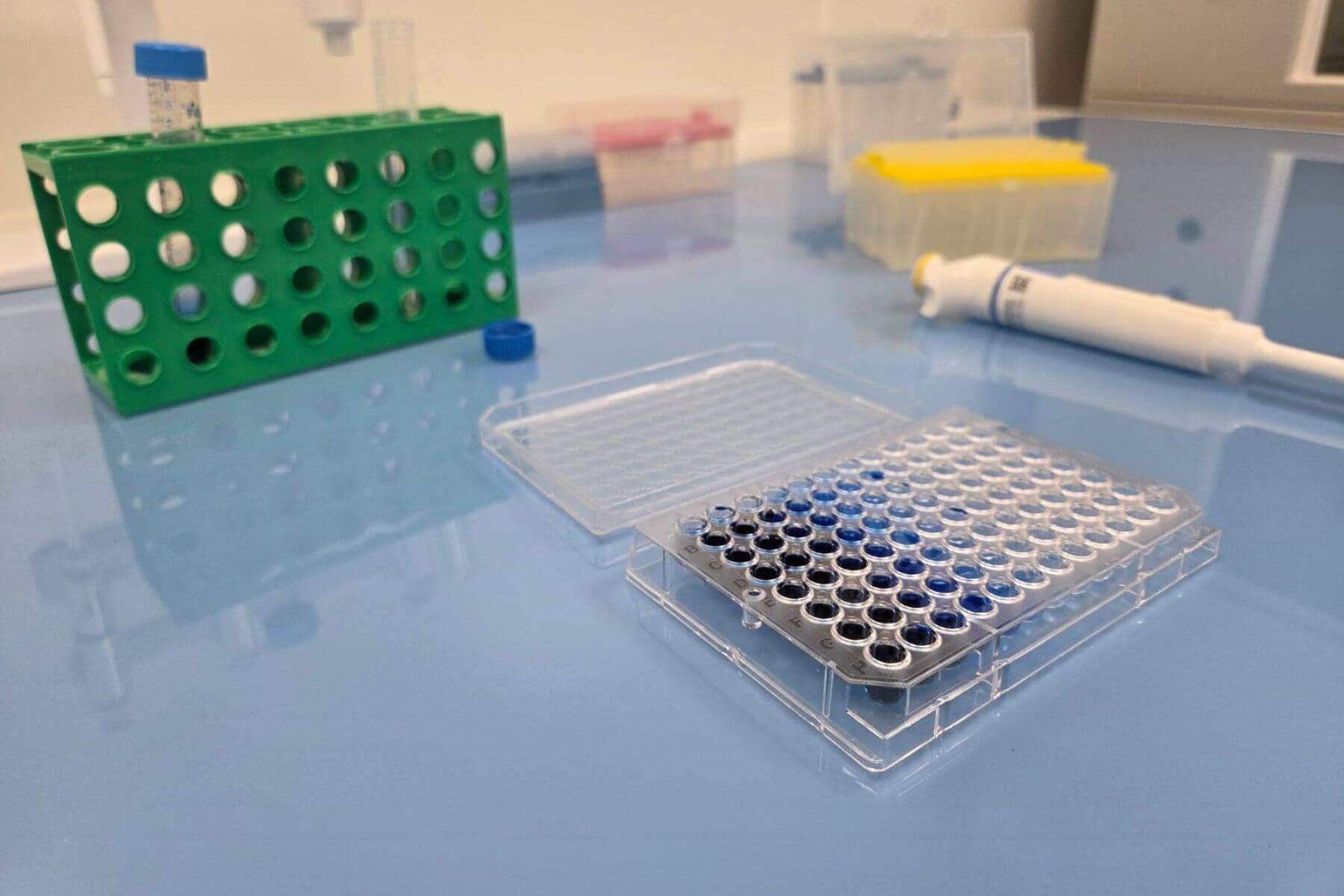
    The clot lysis assay evaluates the efficacy of your fibrinolytic candidates on human plasma pools. Performed by turbidimetry in 96-well plates, it provides rapid assessment of compounds activity through parameters such as the 50% clot lysis time (LT50). The high reproducibility of the assay ensures reliable and straightforward comparison of dose-response curves throughout lead-optimisation phases.

    This assay also allows investigation of compound interactions when combined with reference fibrinolytics (Alteplase, Tenecteplase).

  • Tail bleeding assay

    The tail bleeding test is a goldstandard assay used to evaluate hemostasis and platelet function in vivo.

    This model is sensitive to anticoagulant and fibrinolytic treatments commonly administered in the clinic, such as heparin, direct oral anticoagulants, or Alteplase. This model supports the evaluation of candidate efficacy across multiple drug classes, such as anticoagulants, procoagulants, and antiplatelet agents.

    Validated model available in mice

    • In vitro model of hemostasis and coagulation
  • tMCAO model – Mechanical ischemia/reperfusion

    This preclinical ischemic stroke model relies on a transient mechanical occlusion of the MCA (tMCAO), reproducing cerebral ischemia followed by controlled reperfusion. As a historical and extensively documented model, it produces both cortical and subcortical lesions, enabling the evaluation of a wide range of therapeutic strategies against a pharmacological reference, as well as detailed exploration of their effects on tissue evolution and on longterm sensorimotor and cognitive recovery.

    Validated model available in mice and rats.

  • MCA occlusion by thrombin injection

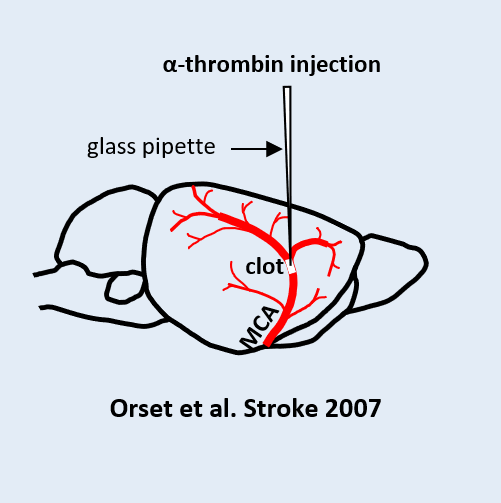
    MCA occlusion by thrombin injection

    This preclinical ischemic stroke model is induced by the formation of a fibrinrich clot in the MCA. This clot is efficiently lysed by standard clinical fibrinolytics (Alteplase, Tenecteplase), reflecting the patient subgroup that responds to standard-of-care fibrinolytics. This makes the model a key translational tool for assessing the efficacy of your thrombolytic candidates. This model is also highly relevant for evaluating neuroprotective compounds in an experimental setting that closely mimics the clinical reality of the acute phase of stroke (with the presence of a thrombus and pharmacological recanalization achieved within a clinically relevant treatment window). It additionally enables the study of interactions with reference fibrinolytic treatments.

    Validated model available in mice.

  • Glutamate-induced toxicity : 2D culture

    Glutamate-induced toxicity : 2D culture

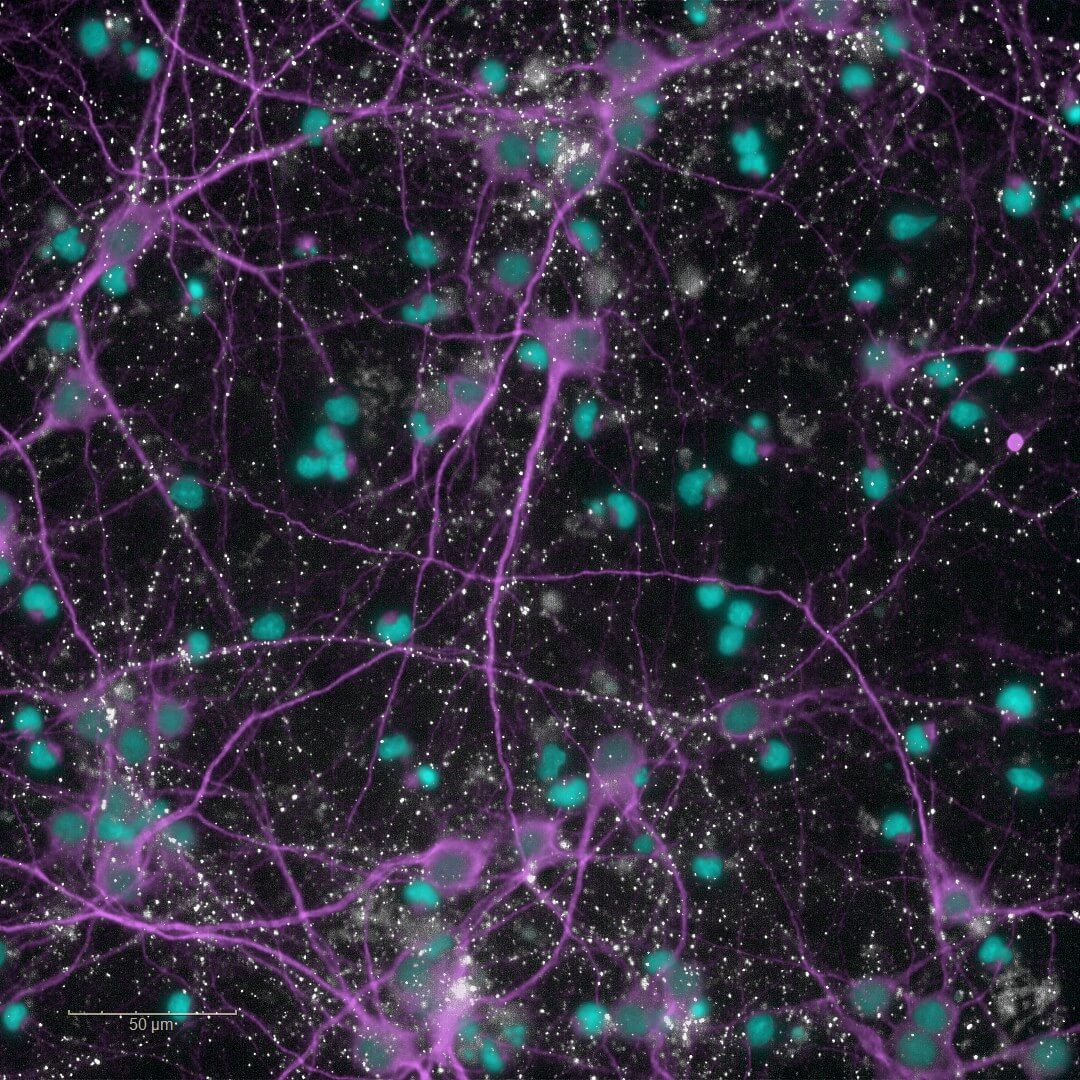
    Our 2D excitotoxicity model provides a rapid and reliable platform to screen neuroprotective compounds in primary rodent neuronal cultures exposed to glutamate overload, with MK801 as a reference compound.

    Our high‑content imaging platform supports medium‑throughput screening of glutamate‑induced effects at both acute excitotoxic concentrations and sub-toxic levels that reduce synaptic density or disrupt neuritic network organisation.

    Excitotoxicity is a key pathophysiological mechanism within the ischemic cascade following stroke. It emerges within minutes to hours of stroke onset and persists throughout post‑ischemic phases (inflammation, synaptic remodelling, and epileptogenic hyperexcitability).

  • Clot lysis assay

    Clot lysis assay

    Documenting potential interactions between reference fibrinolytics and drug candidates is required by regulatory agencies when these treatments are intended for combined administration during the acute phase of stroke.

    Using turbidimetry in 96-well plates, the clot lysis assay quantifies fibrinolytic activity in human plasma pools, relying on parameters such as the 50% clot lysis time (LT50). The high reproducibility of the assay ensures reliable and straightforward comparison of dose-response curves for Alteplase or Tenecteplase, either alone or in combination with multiple concentrations of your compound.

1 2 3
Next Page
Logo
Home Our services Working with us Company
News Career Contact
FrançaisEnglish
ETAP SA (Head office)
13, rue du Bois de la Champelle
54500 Vandœuvre-lès-Nancy
FRANCE
Phone no.:
+33 (0)383 444 635
Contact us →
Subscribe to our newsletter and get all our latest news.
GET OUR NEWSLETTERS
LinkedIn
Legal Notice · Design by Thibaut Marquis · Dev by Yann Sainty · Capital ETAP SA 45737 €
ETAP-LAB
Manage consent
To provide the best experiences, we use technologies such as cookies to store and/or access device information. Consenting to these technologies will allow us to process data such as browsing behavior or unique IDs on this site. Not consenting or withdrawing consent may adversely affect certain features and functions.
Functional Always active
The technical storage or access is strictly necessary for the legitimate interest purpose of enabling the use of a specific service explicitly requested by the subscriber or user, or solely for the purpose of carrying out the transmission of a communication over an electronic communications network.
Preferences
The technical storage or access is necessary for the legitimate interest purpose of storing preferences that are not requested by the subscriber or user.
Statistics
The technical storage or access that is used exclusively for statistical purposes. The technical storage or access that is used exclusively for anonymous statistical purposes. In the absence of a subpoena, voluntary compliance from your Internet Service Provider, or additional records from a third party, the information stored or retrieved for this sole purpose cannot generally be used to identify you.
Marketing
The technical storage or access is required to create user profiles in order to send advertising, or to track the user on a website or across several websites for similar marketing purposes.
  • Manage options
  • Manage services
  • Manage {vendor_count} vendors
  • Read more about these purposes
View preferences
  • {title}
  • {title}
  • {title}